
From 1 July 2026, superannuation must be paid every pay run - not quarterly. Here’s what that actually looks like for a small business.
If you employ staff, there’s a change coming on 1 July that will affect how you run payroll. It’s called PayDay Super, and the short version is this: super must be paid at the same time as wages.
Right now, most businesses pay super quarterly. You run payroll each week or fortnight, and super gets batched up and paid every three months. That’s about to end.
The change: From 1 July 2026, super is due with every pay run. If you pay staff weekly, super is due weekly. If you pay fortnightly, super is due fortnightly.
Why is this happening?
The government wants employees to receive their super sooner. Under the current system, a worker could wait up to three months for their super to land in their fund. That’s three months of missed investment returns.
PayDay Super closes that gap. Employees get their super when they get their pay.
What does this mean for you as a business owner?
Three things will change in practice.
Your payroll process changes.Super won’t be a quarterly task anymore. Your payroll software needs to calculate and send super with every pay run. That means your settings need updating, and your software needs to be connected to your super fund or clearing house before 1 July.
Your cash flow changes. This is the big one. Instead of holding three months’ worth of super and paying it in one lump, you’ll be paying it out every pay cycle. The total amount over the year is the same - but the timing shifts. Your bank account needs enough in it on each pay day to cover wages and super together.
If you’re running tight on cash flow some weeks, this needs planning. It’s not a surprise you want to deal with after 1 July.
Your employee records need to be right.When super was quarterly, a wrong member number or outdated fund detail might get picked up and fixed before the next payment. With super going out every pay run, errors will cause problems faster. Now’s the time to check every employee’s fund name, USI, and member number.
A word on qualifying earnings: Super is calculated on ordinary time earnings - things like base pay, leave loading, and commissions. Overtime and some other payments don’t count. When you move to per-pay-run calculations, it’s worth checking your payroll system has these categories set up correctly. Small errors compound quickly when they happen every pay cycle.
When do you need to be ready?
1 July 2026. That’s the deadline - but don’t wait until late June.
We’d suggest getting your payroll settings updated and tested by the end of May. That gives you a buffer to sort out any issues before the first real pay run under the new rules.
What should you do right now?
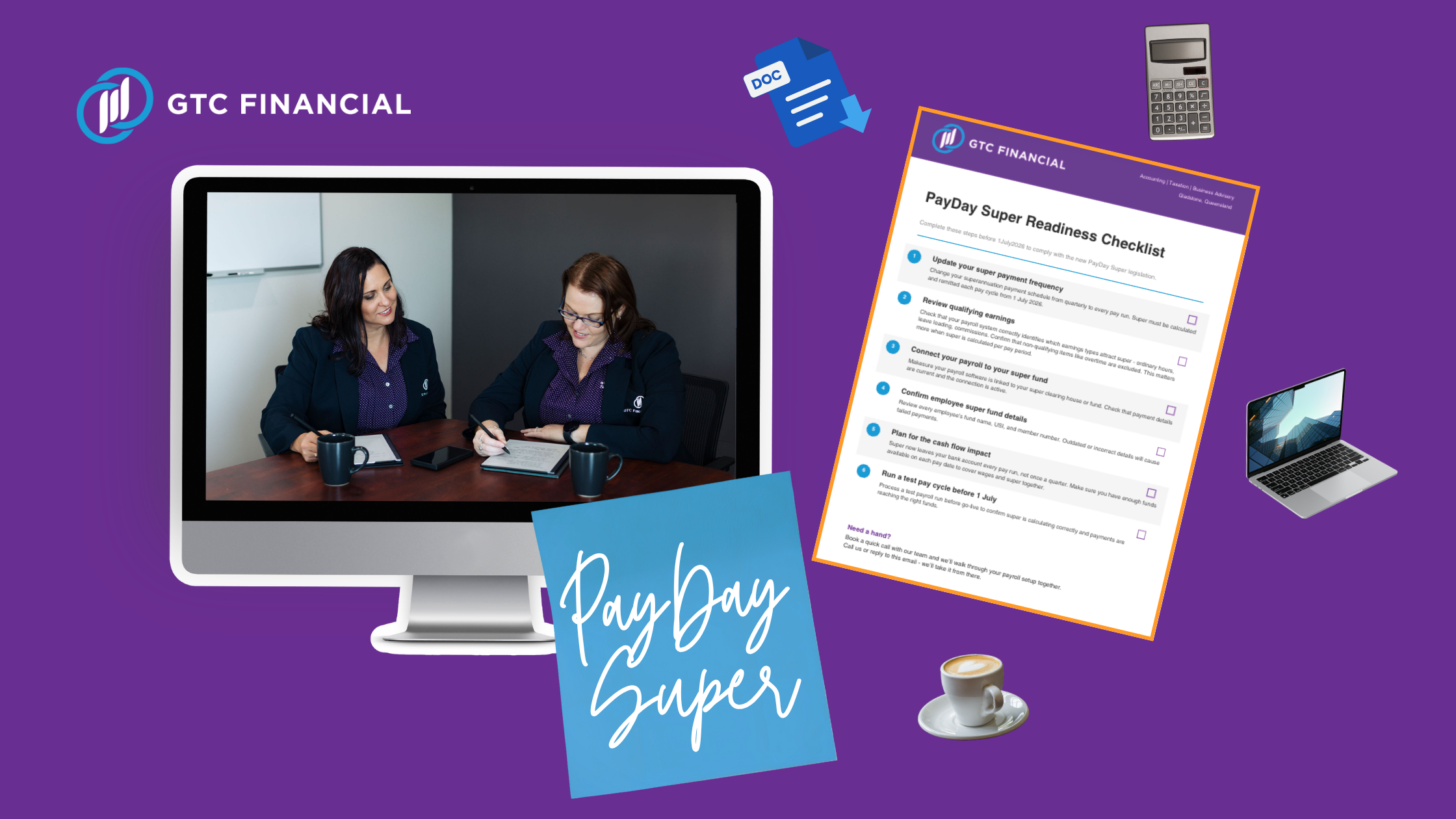
We’ve put together a one-page checklist that walks through everything step by step. It covers your payroll settings, employee fund details, cash flow planning, and a test run before go-live.
Print it out, hand it to whoever manages your payroll, and tick each item off as you go.
Download the PayDay Super checklist
A printable, step-by-step guide to getting your payroll ready before 1 July.
PayDay Super Readiness Checklist
Not sure where to start?
If payroll setup isn’t your thing - and for most business owners, it isn’t - we’re here to help. Book a quick call with our team and we’ll walk through your system together. We’ll flag anything that needs changing and make sure you’re sorted before the deadline.
You didn’t start your business to manage superannuation schedules. But getting this right protects your business and your team. We’ll make it as painless as possible.
Book a payroll check-up. Call us on (07) 4972 5177. We’ll take it from there.